
Legal advice on wills, probate, inheritance claims and estate administration involving UAE property, bank accounts, family assets and cross-border estates.
Confidential Consultation · EN, AR & RU
What happens to an estate depends on whether the deceased left a valid will, which inheritance framework applies and what assets are located in the UAE.
Our inheritance lawyers advise families, beneficiaries and executors on probate, estate administration, succession rights and the transfer of UAE assets.
Where a valid registered will applies, the estate is administered through the relevant probate or succession procedure according to the will and applicable law. Without a will, statutory inheritance rules may determine who receives the estate.
Our lawyers assist with probate and estate files, succession certificates, inheritance claims, UAE property, financial assets, foreign wills and disputes between beneficiaries.
The applicable framework differs significantly between Muslim and non-Muslim estates. Muslim inheritance is governed under the current Federal Decree-Law No. 41 of 2024, while qualifying non-Muslim estates may fall within the civil inheritance regime established by Federal Decree-Law No. 41 of 2022
The legal route depends on whether there is a registered will, the applicable inheritance framework and the assets forming part of the estate.

Identify whether a valid will exists and which succession rules apply to the estate.

Review UAE property, bank accounts, company interests and other assets belonging to the deceased.

Submit the required death, heir and estate documents through the competent court or probate registry.

Obtain the necessary orders and complete the transfer or distribution of assets to the beneficiaries.
Legal support is particularly important where an estate contains UAE assets, multiple heirs, a foreign will or disagreement about how the estate should be administered.

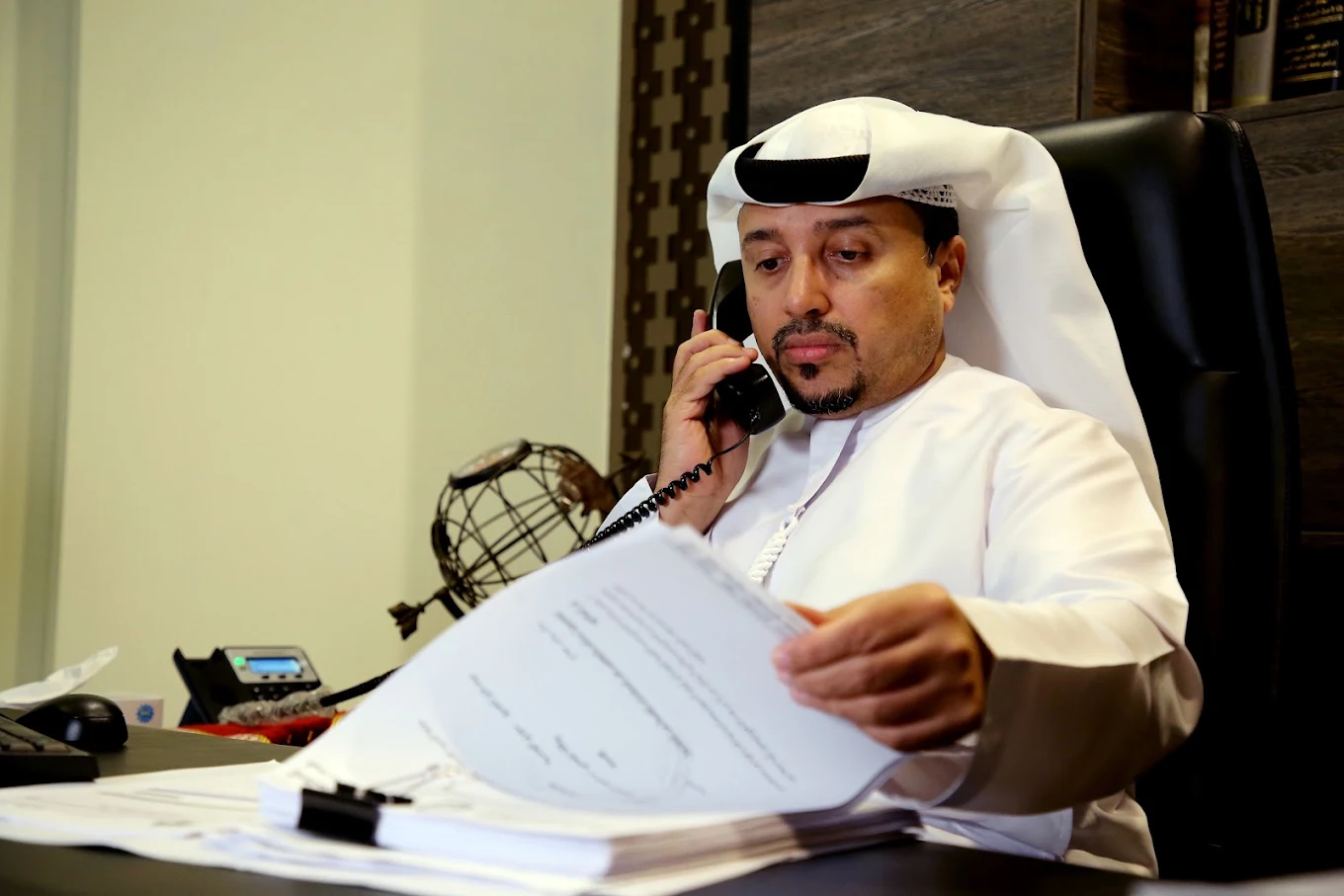
Founder & Managing Partner
Our legal team advises families, executors and beneficiaries on wills, probate, inheritance disputes and estate administration involving UAE and cross-border assets.
More Than 25 Years of UAE Legal Experience
Experience advising individuals and families on inheritance, estate and personal-status matters across the UAE.
Muslim and Non-Muslim Succession Advice
We identify the inheritance framework that applies before advising on entitlement or estate distribution.
Probate and Estate Representation
Support with estate files, succession documentation, probate proceedings and transfer of assets.
Cross-Border Estate Support
Advice where foreign wills, overseas heirs or assets in multiple jurisdictions affect the UAE estate.
In UAE Law Practices
Across All Emirates
Firm records
Certificate on request
We first establish the applicable inheritance framework and estate assets before determining the probate, succession or court steps required.
Share the death certificate, will if available, family details and known UAE assets.
We identify the applicable law, heirs, beneficiaries and probate or succession route.
We organise the required documents and assist with the relevant court or probate applications.
We support the orders, transfers, distributions or disputes required to bring the estate matter forward.
Inheritance matters often connect with estate planning, property ownership, guardianship and wider family-law issues.
Tell us whether there is a will, who the known heirs are and what UAE assets form part of the estate. Our lawyers can identify the applicable legal and probate route.
Confidential Consultation · EN, AR & RU
 4.8Top Rated Service 2026verified by TrustindexTrustindex verifies that the company has a review score above 4.5, based on reviews collected on Google over the past 12 months, qualifying it to receive the Top Rated Certificate.
We advise families, investors and business owners whose estates may contain property, company interests, investments or other UAE assets.
Inheritance advice involving residential, commercial and investment property in the UAE.
Estate matters involving contracting businesses, company interests and project-related assets.
Succession support for executives, shareholders and families with ownership interests in UAE companies.
Inheritance advice involving startup equity, digital business interests and other technology-related assets.
Estate and succession support for healthcare professionals, investors and business owners.
Inheritance matters involving trading companies, family businesses and commercial assets.
Estate advice involving business interests, investments and internationally held assets.
Succession support for company owners and families with transport, logistics or cross-border business interests.
Where Federal Decree-Law No. 41 of 2022 applies and the deceased leaves a spouse and children, the surviving spouse receives half of the estate and the remaining half is divided equally among the children without distinction between males and females. Other distribution rules apply where there are no children. The law also allows a foreign heir, in certain circumstances, to request application of the law otherwise applicable to the estate unless a registered will provides otherwise.
No. Muslim succession is governed by the current Personal Status Law, Federal Decree-Law No. 41 of 2024, which applies fixed shares and other inheritance rules. For example, the surviving husband’s share differs depending on whether the deceased leaves an inheriting descendant.
The property forms part of the deceased’s estate and generally cannot simply be transferred by family members informally. The heirs must follow the relevant succession and estate procedure before ownership can be transferred.
Financial assets may need to remain within the estate process until the competent authority issues the required succession or probate documentation. DIFC probate orders, for example, can include bank accounts and other financial assets forming part of the estate.
Potentially, but it should not be assumed to apply automatically. The will and related documents need to be reviewed for the relevant UAE procedure. Dubai Courts requires foreign documents used in inheritance proceedings to be officially attested and legally translated into Arabic where applicable.
That depends on eligibility, religion, assets and the intended coverage of the will. DIFC Courts, the Abu Dhabi Civil Wills Office and Dubai Courts provide different registration or certification routes with different requirements.
Dubai Courts currently lists documents including an attested death certificate, copies of the heirs’ passports, Emirates IDs and heir contact information. Foreign-language documents require approved Arabic legal translation and foreign-issued documents require the applicable authentication process.
Dubai Courts’ current inheritance fee schedule lists AED 200 to open an estate file. Other applications have separate fees; for example, proving, invalidating, amending, revoking or executing a will is currently listed at AED 1,000.
Tell us the matter type and your enquiry goes straight to the right lawyer.
+971 50 441 8952
+971 50 441 8952
Office 1305, Fairmont Hotel Sheikh Zayed Road, World Trade Center, Dubai
Confidential Consultation · EN, AR & RU · Reply within one business day.

Divorce law in the UAE depends on the legal framework that...

Family law is the area of law that governs legal relationships...

Getting married in the UAE is straightforward once you choose the...
Al Ramsy Advocates
Typically replies within 1 business day
Online | Privacy policy
Talk to a Consultant
Tell us what happened
No charge for the first conversation. We read every enquiry before we reply to it.
